Read one horoscopeand it all sounds right

When Saju says one thing and a birth chart says another, it is hard to know what to keep. We calculate the same birth through five interpretive rule sets, then show where they say the same thing and where they part.

Example birth
1990-03-14 04:20 · Seoul (Korean Standard Time; GMT+9)

Each system divides the same sky its own way

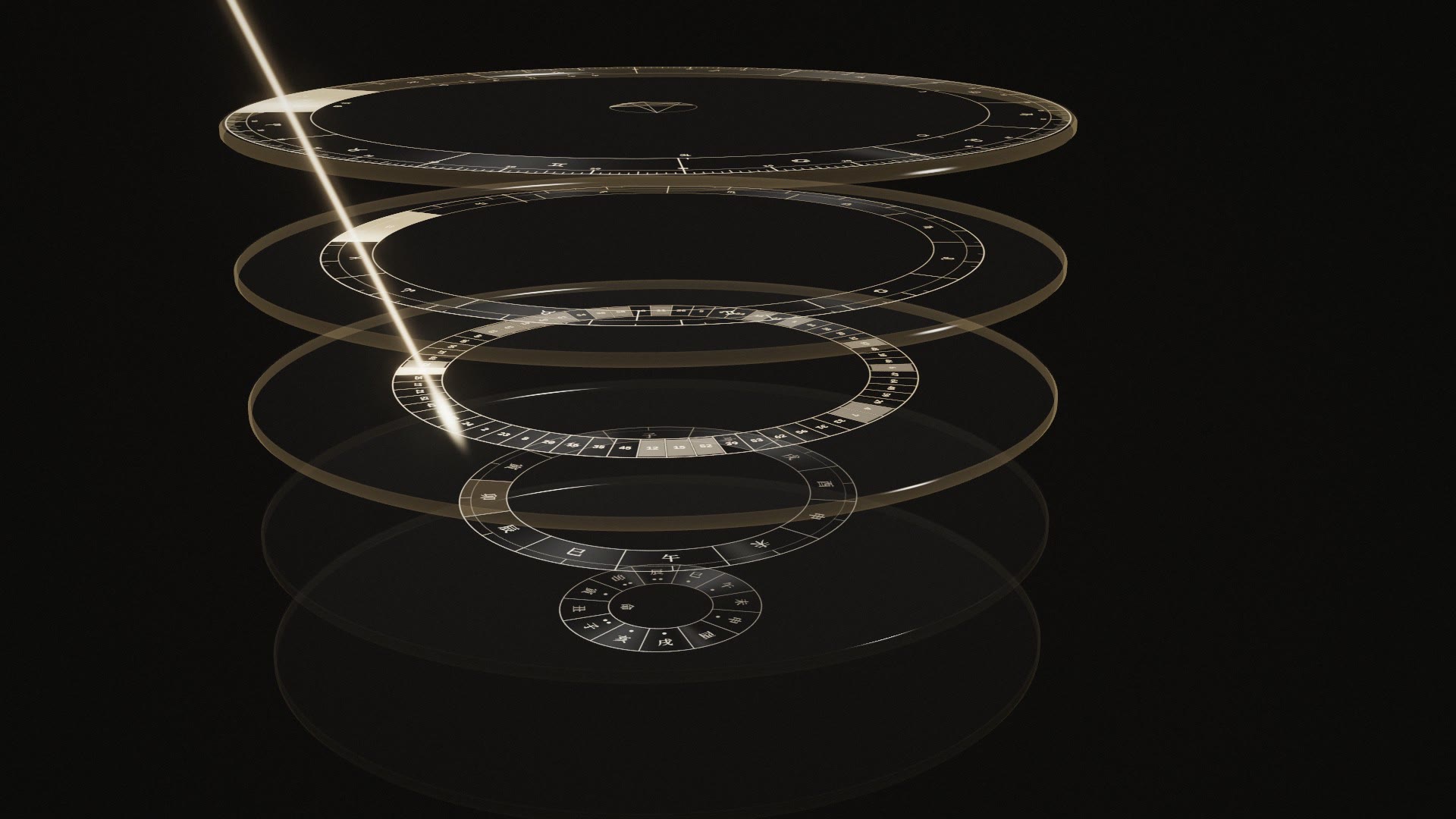
14 March 1990 at 4:20, Seoul. There was one Sun. Follow the line through it and the same point is read under a different name on every plate.

  1. Western Natal Astrology12 signs from the equinoxSun · Pisces 22°57′
  2. Jyotish12 signs from the fixed starsSun · Aquarius 29°14′Zero point 23.72° apart (Lahiri ayanamsha)
  3. Human Design64 gates on the eclipticSun · gate 36, line 1
  4. Saju24 solar terms, 12 monthsSun · the 卯 monthMonth pillar 己卯
  5. Zi Wei Dou Shu12 palaces from the lunar dateLife Palace 丑From lunar 2/18 and the hour of 寅, not from the Sun

The line through the Sun crosses four plates and stops short of Zi Wei, which starts from the lunar date and the hour rather than from where the Sun stood.

A diagram of the example birth drawn as five discs: from the outside in, the Western twelve signs, the Jyotish twelve signs, the sixty-four Human Design gates, the twenty-four Saju solar terms and the twelve Zi Wei palaces. A line through the Sun crosses the first four.

Five readings of one birth

Each chart below is the engine's own output for the example. Read separately first, so nothing is counted as agreement before it is compared.

Western Natal Astrology

Talking it through is easy. Pushing it through is not.

Western astrology looks at where the planets stood at the moment of birth. Their positions are grouped into fire, earth, air and water, and this chart comes out at air 4.5 and water 4.5 — the two are equal to the decimal.

Air stands for speech and thought, water for feeling and relationship. With both this high, working things out with people takes little effort. Earth is only 2 and fire only 0.5, so holding one thing down and forcing it forward is the weaker side. The chart is also led by Saturn, a planet whose results arrive late. Settling takes time.

Western astrology looks at where the planets stood at the moment of birth. Their positions are grouped into fire, earth, air and water, and this chart comes out at air 4.5 and water 4.5 — the two are equal to the decimal.

Read the full interpretation

Air stands for speech and thought, water for feeling and relationship. With both this high, working things out with people takes little effort. Earth is only 2 and fire only 0.5, so holding one thing down and forcing it forward is the weaker side. The chart is also led by Saturn, a planet whose results arrive late. Settling takes time.

Compact mobile view · the full wheel relationships appear on wider screens.

The sky over Seoul at 04:20 on 14 March 1990. The Ascendant is on the left, and the twelve houses run counterclockwise from it.

PlanetPositionHouseAltitude
SunPisces 22°57'3▼ 28.8°
MoonLibra 19°26'10▲ 31.4°
MercuryPisces 18°00'3▼ 28.3°
VenusAquarius 7°42'2▼ 1.6°
MarsAquarius 1°35'2▼ 1.4°
JupiterCancer 1°17'7▼ 16.1°
SaturnCapricorn 23°12'1▲ 4.2°
UranusCapricorn 9°11'1▲ 12.0°
NeptuneCapricorn 14°16'1▲ 10.0°
Pluto℞Scorpio 17°38'11▲ 50.6°
North Node℞Aquarius 14°39'2computed point
South Node℞Leo 14°39'8computed point

1990-03-14 04:20 (Korean Standard Time; GMT+9)

night chart · ruler Saturn
major aspects 15

Ivory above the horizon at birth; grey, below it.
The sky over Seoul at 04:20 on 14 March 1990. The Ascendant is on the left, and the twelve houses run counterclockwise from it.
Saju

Plenty of push, nothing holding it up

Saju writes the year, month, day and hour of birth as two characters each. Eight characters in total. Those eight are sorted into wood, fire, earth, metal and water to see which way the chart leans.

Here wood is over half and water is zero. Wood is the force that grows outward; water is what feeds it and lets it rest. There is more than enough drive and nothing to slow it down mid-course. It is easy to carry everything alone until it runs out, so it is worth arranging people to lean on, and a habit of stopping, before they are needed.

Saju writes the year, month, day and hour of birth as two characters each. Eight characters in total. Those eight are sorted into wood, fire, earth, metal and water to see which way the chart leans.

Read the full interpretation

Here wood is over half and water is zero. Wood is the force that grows outward; water is what feeds it and lets it rest. There is more than enough drive and nothing to slow it down mid-course. It is easy to carry everything alone until it runs out, so it is worth arranging people to lean on, and a habit of stopping, before they are needed.

Compact mobile view · hidden stems are stacked independently by pillar.

The eight characters above, the energies each one carries hanging beneath.

Above the line is what the chart declares; below it is what its branches carry without showing. Ivory marks a buried stem that also stands on the surface.

1990-03-14 04:20 (Korean Standard Time; GMT+9) · Lunar 1990-02-18 · Awakening of Insects → Spring Equinox

Day master Wu(戊) Earth · Weak · Direct Officer structure · Void Shen·You
stem clash Geng–Jia · stem combine Ji–Jia · break Wu–Mao

The eight characters above, the energies each one carries hanging beneath.
Zi Wei Dou Shu

The star that steps forward and the star that holds back share a palace

Zi Wei builds a board of twelve palaces from the hour of birth and places stars on it. Each palace stands for one area of a life — money, work, family — and the one standing for the person is the Life Palace.

Here the Life Palace holds the Sun and the Moon together. The Sun steps out and shows itself; the Moon keeps things in and watches. Two opposites in one palace, so this person can look like a different person depending on the room. The Saju board did not say this, and where the five disagree the disagreement is recorded as it stands.

Zi Wei builds a board of twelve palaces from the hour of birth and places stars on it. Each palace stands for one area of a life — money, work, family — and the one standing for the person is the Life Palace.

Read the full interpretation

Here the Life Palace holds the Sun and the Moon together. The Sun steps out and shows itself; the Moon keeps things in and watches. Two opposites in one palace, so this person can look like a different person depending on the room. The Saju board did not say this, and where the five disagree the disagreement is recorded as it stands.

Compact mobile view · palace height and linked-palace lines appear on wider screens.

Stars across the twelve palaces. A palace stands as high as what it holds.

Wu Yin16–25
Ji Mao26–35
Geng Chen36–45
Xin Si46–55
Ren Wu56–65
Gui Wei66–75
Jia Shen76–85
Yi You86–95
Bing Xu96–105
Ding Hai106–115
Wu Zi116–125
Ji Chou6–15

Height is what the palace holds — major stars, transformations, minor stars. The lines are the four palaces read together: the Life palace, the two that trine it, and the one opposite.

1990-03-14 04:20 (Korean Standard Time; GMT+9)

Geng Wu, Ji Mao, Wu Yin, Jia Yin

Fire 6 · Life palace in Chou
Yin hour 03:00~05:00

Stars across the twelve palaces. A palace stands as high as what it holds.
Jyotish

What gets started gets finished

Jyotish is the astrology used in India. It reads the same sky as Western astrology but sets its zero point differently, so the same person comes out in different signs. Put the two side by side and where they overlap and where they part both show at once.

The sign on the eastern horizon at birth is called the lagna. Here it is Capricorn, in the nakshatra Uttara Ashadha — a name that means 'the latter victory'. Not the seat of quick wins but of late ones: strength arrives at the finish rather than the start.

Jyotish is the astrology used in India. It reads the same sky as Western astrology but sets its zero point differently, so the same person comes out in different signs. Put the two side by side and where they overlap and where they part both show at once.

Read the full interpretation

The sign on the eastern horizon at birth is called the lagna. Here it is Capricorn, in the nakshatra Uttara Ashadha — a name that means 'the latter victory'. Not the seat of quick wins but of late ones: strength arrives at the finish rather than the start.

Compact mobile view · D1↔D9 links appear on wider screens.

The birth chart in front, its navamsa — the same instant at nine times the magnification — set behind it. Each line follows one planet between the two.

GrahaD1D9NakshatraDignity
SunAqu 29°14'GemPurva BhadrapadaEnemy's sign
MoonVir 25°43'LeoChitraFriend's sign
MercuryAqu 24°17'TauPurva BhadrapadaNeutral sign
VenusCap 13°59'TauShravanaFriend's sign
MarsCap 7°52'PisUttara AshadhaExalted
JupiterGem 7°34'SagArdraEnemy's sign
SaturnSag 29°29'SagUttara AshadhaNeutral sign
UranusSag 15°27'LeoPurva AshadhaOrdinary
NeptuneSag 20°33'LibPurva AshadhaOrdinary
Pluto℞Lib 23°55'TauVishakhaOrdinary
Rahu℞Cap 20°56'CanShravanaOrdinary
Ketu℞Can 20°56'CapAshleshaOrdinary

1990-03-14 04:20 (Korean Standard Time; GMT+9)

D1 birth chart · D9 navamsa
Ayanamsha lahiri 23.72°

The near diamond is the birth chart; the one set back behind it is its navamsa — the same instant at nine times the magnification. Each line follows one graha from the house it holds in D1 to the one it holds in D9.

The birth chart in front, its navamsa — the same instant at nine times the magnification — set behind it. Each line follows one planet between the two.
Human Design

Wait for emotional clarity, then inform before initiating

Human Design is the only recent one of the five. 1987. Its language and calculation differ from the older traditions, so it is read separately first and counted as overlap only where the final comparison establishes the same meaning.

Human Design symbolically divides the bodygraph into nine centres. A centre joined by a completed channel is read as relatively repeatable, while undefined or open centres are read as more variable with people and environment. Two centres are defined here: the throat and the emotional centre.

In this sample, Emotional Authority describes when to decide, while the Manifestor strategy describes how to carry that decision into action. It first avoids fixing an answer at the high or low of a wave and checks what remains clear afterward. Then it informs the people who will be affected and initiates without asking permission. The sequence is clarity, informing, and action—not acting first and explaining afterward.

Human Design is the only recent one of the five. 1987. Its language and calculation differ from the older traditions, so it is read separately first and counted as overlap only where the final comparison establishes the same meaning.

Read the full interpretation

Human Design symbolically divides the bodygraph into nine centres. A centre joined by a completed channel is read as relatively repeatable, while undefined or open centres are read as more variable with people and environment. Two centres are defined here: the throat and the emotional centre.

In this sample, Emotional Authority describes when to decide, while the Manifestor strategy describes how to carry that decision into action. It first avoids fixing an answer at the high or low of a wave and checks what remains clear afterward. Then it informs the people who will be affected and initiates without asking permission. The sequence is clarity, informing, and action—not acting first and explaining afterward.

Filled shapes are defined centres. Faint lines show possible wiring; only the heavy, bright path is a completed channel. The numbers identify that channel's gates.

That is all five, read separately. Now lay them over each other.

No shared theme survived the comparison

In this example no theme was raised by more than one system, so none is printed as shared. Where they do not meet, the report says so rather than smoothing the sentences until they appear to.

This counts interpretive systems, not independent evidence. Some systems share the same astronomical calculation root, and agreement does not make a claim true.

Western Natal AstrologySajuZi Wei Dou ShuJyotishHuman DesignNothing shared

The line through the Sun

The same idea once more, in glass and light. Every mark engraved on the five plates is the example birth's calculated value, and the sound rings where the light passes through a plate.

0:43 · with sound

Film transcript. 14 March 1990, 04:20, Seoul. One moment of birth. Five scales. The line through the Sun crosses the Western plate at Pisces 22°57′, the Jyotish plate at Aquarius 29°14′, the Human Design plate at gate 36, line 1, and the Saju plate in the 卯 month, then passes the Zi Wei plate without touching a mark; Zi Wei's Life Palace 丑 lights by itself, from the lunar date and the hour. One moment, read on five scales. Fortune Atlas.

We do not start with a flattering sentence.

We calculate the birth data first, complete each tradition's reading, then bring repeated patterns and different perspectives into one report.

  1. Accurate birth details

    Record the date, place, time, and how certain that time is.

  2. Five perspectives

    Explore Western Natal Astrology, Saju, Zi Wei, Jyotish, and Human Design in depth.

  3. Clear, useful language

    Translate technical terms into the areas of life people actually ask about.

  4. Your recurring pattern

    See repeated strengths, disagreements, and current timing in one place.

The same date and time always produce the same values.

Run the same five scales on your own birth

A birth date and time is all it takes. The same five readings above, calculated for you instead.

Make my report

What you enter is used to build the report and nothing else.